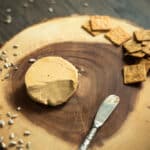
Cultured Sunflower Cream Cheese
This dairy free cheese uses traditional cheese making techniques. You start by making a sunflower seed milk, then you culture it so it curdles, then you press out the whey from the curds, mix in some additional flavorings, and pour into a mold. Say goodbye to grainy seed paste that claims to be cheese and try out this real sunflower cheese recipe!
Print Recipe
Equipment
- Cheese Cloth or thin tea towel
- Instant Pot or Slow Cooker
- Tofu Press or large Mesh Strainer
- Milk Maker Optional, brands like Nuter, Almond Cow, ect
Ingredients
Sunflower Milk
- 1 cup Raw Sunflower Seeds
- 3 tbs Hemp Seeds Optional, adds healthy omega 3 fatty acids and makes the cheese richer
- 3 tbs Hazelnuts Optional, increases richness. Walnuts or pecans also work
- 5 cups Water
Culturing
- 2 tbs Yogurt of any kind, preferably unflavored, or add a probiotic capsule
Cheese Flavoring
- 3 tbs Coconut Oil* Helps firm the cheese up as it has a melting point of 76F, cold cheese be firmer, sliceable yet able to melt
- 1 tbs Tapioca Starch Helps bind the extra oil to the cheese
- 1 tsp Sea Salt Consider using smoked salt
- 2 tsp Miso Light Miso, Chickpea Miso, Sweet Miso
- 2 tbs Nutritional Yeast Flakes Optional, substitute with 1 tbs mushroom seasoning or 1 tsp MSG
- ½ tsp Smoked Paprika Optional
- ½ tsp Truffle Oil Optional, but delicious
Instructions
Sunflower Milk
- Soak your sunflower seeds overnight in the refrigerator
- Strain and rinse your seeds and either add them to your milk maker or to your blender. Add in about 5 cups of water. Blend until smooth and strain. If using a blender strain using either a cheesecloth or a nut milk bag. Discard the sunflower seed pulp (use for another recipe by adding it to your granola, oatmeal, sourdough, ect)
Culture Your Milk
- Add your milk to either an instant pot or a slow cooker. If using an instant pot set the temperature to the yogurt setting, if using a slow cooker set it to the coolest setting possible like keep warm. Too warm of a temperature will kill the probiotics, too cool and it will take a long time to culture. It needs to be at a temperature around 110FAdd in the yogurt to the milk and leave it overnight (8-12 hours), The longer you leave the milk to culture the sourer and more intense the flavor. If you want a milder flavored cheese, you can culture it in as little as 4 hours, just look for curdling and separation. If you don't culture long enough the curds maybe too delicate and strain throw the cheesecloth- resulting in a smaller amount of cheese. This mixture will be thin even after culturing. The goal here is to get the milk to curdle, become probotic, and have a slight tangy flavor
Forming the Cheese
- Line a tofu mold/ tofu press/ mesh strainer with cheese clothPour the cultured milk into the tofu mold slowly and you will see the watery whey separate from the curds. Allow it to strain until you are left with a thick cream. If you are using a tofu mold/press wrap the cheese cloth over the surface of the cream and press out more of the water. The longer you leave the cheese to press the firmer your cheese will be. Be careful to not press too hard so the curds don't come out of the fabric If you do not have a tofu press/tofu mold simply squeeze the liquid out of the cheesecloth gently so you are left with a thick cream cheese
- Scrap out the cheese from the cheese cloth into a blender. Add the coconut oil*, salt, starch, miso, and nutritional yeast. Blend until well incorporated
- Pour the mixture into a mold. You can line a small bowl with parchment paper for a mold, use a silicone mold, or use a small cake ring. Leave in the refrigerator overnight to set
Video
Notes
You can make this cheese without any added oil.
Coconut oil helps this cheese be firmer. However it will still taste fantastic as a soft cheese! If you leave out the coconut oil consider treating this cheese like a thick cream cheese. It is fantastic spread over breads or filled into pasta! Use a high-grade cheese cloth to prevent curds from coming through the fabric.
If the holes are too large in your cheese cloth you will have a smaller yield. Often the single use cheese cloth fabrics have a larger porosity and will allow curds to pass through.
A grade 90 reusable cheese cloth or a thin, clean tea towel is ideal. In equipment section I linked to the reusable cheese cloth that I use.
Coconut oil helps this cheese be firmer. However it will still taste fantastic as a soft cheese! If you leave out the coconut oil consider treating this cheese like a thick cream cheese. It is fantastic spread over breads or filled into pasta! Use a high-grade cheese cloth to prevent curds from coming through the fabric.
If the holes are too large in your cheese cloth you will have a smaller yield. Often the single use cheese cloth fabrics have a larger porosity and will allow curds to pass through.
A grade 90 reusable cheese cloth or a thin, clean tea towel is ideal. In equipment section I linked to the reusable cheese cloth that I use.
Nutrition
Calories: 253kcal | Carbohydrates: 8g | Protein: 9g | Fat: 22g | Saturated Fat: 7g | Polyunsaturated Fat: 8g | Monounsaturated Fat: 5g | Cholesterol: 0.3mg | Sodium: 476mg | Potassium: 206mg | Fiber: 3g | Sugar: 1g | Vitamin A: 52IU | Vitamin C: 0.3mg | Calcium: 41mg | Iron: 2mg